
 EN
EN



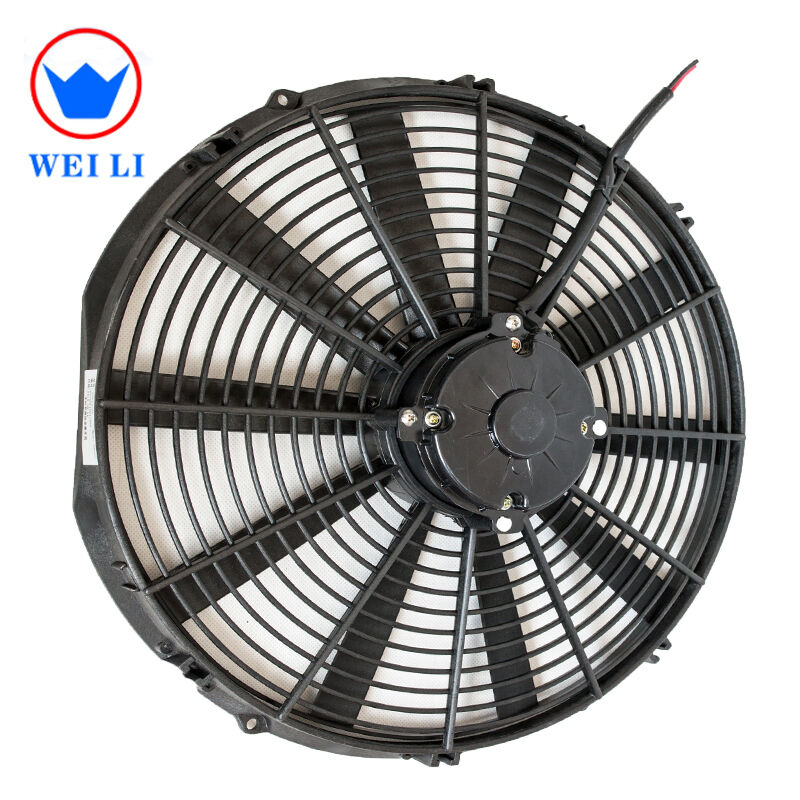
The condenser fan plays a pivotal role in vehicle air conditioning systems by facilitating heat exchange between the refrigerant and ambient air. When refrigerant enters the condenser as a high-pressure, high-temperature gas from the compressor, it must release thermal energy to transform into a liquid state. The condenser fan creates the airflow necessary for this cooling process, directly impacting the efficiency and performance of the entire refrigeration cycle in automotive applications.
Understanding how a condenser fan affects refrigerant cooling requires examining the thermodynamic principles governing heat transfer in mobile air conditioning systems. The fan's operational characteristics, including blade design, rotational speed, and airflow patterns, determine how effectively thermal energy transfers from the refrigerant to the surrounding environment. This relationship between fan performance and cooling efficiency becomes particularly critical in vehicle applications where space constraints and varying operating conditions demand optimized heat exchange solutions.
Thermodynamic Principles of Condenser Fan Operation
Heat Transfer Mechanisms in Vehicle Condensers
The condenser fan facilitates heat transfer through forced convection, where mechanical airflow enhances the natural convective process between the condenser coil surface and ambient air. As refrigerant flows through the condenser coil at temperatures typically ranging from 120°F to 150°F, the temperature differential between the coil and surrounding air drives heat exchange. The condenser fan increases air velocity across the coil surface, reducing the thermal boundary layer and improving heat transfer coefficients.
Forced convection heat transfer rates depend on several factors controlled by the condenser fan operation. Air velocity, turbulence intensity, and flow distribution across the condenser surface all influence the convective heat transfer coefficient. Higher fan speeds generally increase heat transfer rates, but optimal performance requires balancing airflow velocity with power consumption and noise considerations in vehicle applications.
The relationship between fan-induced airflow and refrigerant cooling follows established heat exchanger principles. As air passes through the condenser coil, it absorbs thermal energy from the refrigerant, causing its temperature to rise while the refrigerant temperature decreases. The condenser fan must provide sufficient airflow to maintain the temperature differential necessary for continuous heat rejection throughout the refrigeration cycle.
Refrigerant State Changes and Fan Impact
Refrigerant enters the condenser as superheated vapor and must undergo desuperheating, condensation, and subcooling phases before reaching the expansion valve. The condenser fan affects each phase differently through its influence on heat transfer rates. During desuperheating, the fan-driven airflow removes sensible heat from the superheated vapor, reducing its temperature to the saturation point while maintaining constant pressure.
The condensation phase represents the most critical period where the condenser fan impact becomes most pronounced. As refrigerant vapor condenses into liquid at constant temperature and pressure, the latent heat of vaporization must be removed. The condenser fan provides the airflow necessary to maintain heat transfer rates sufficient for complete condensation. Inadequate fan performance during this phase can result in incomplete condensation and reduced system efficiency.
Subcooling occurs when liquid refrigerant temperature drops below the saturation temperature at the given pressure. The condenser fan continues to promote heat transfer during subcooling, providing additional cooling capacity and ensuring liquid refrigerant enters the expansion valve at optimal conditions. Proper subcooling, facilitated by effective condenser fan operation, improves system efficiency and prevents flash gas formation in the expansion device.
Airflow Dynamics and Cooling Performance
Fan Blade Design and Air Movement Patterns
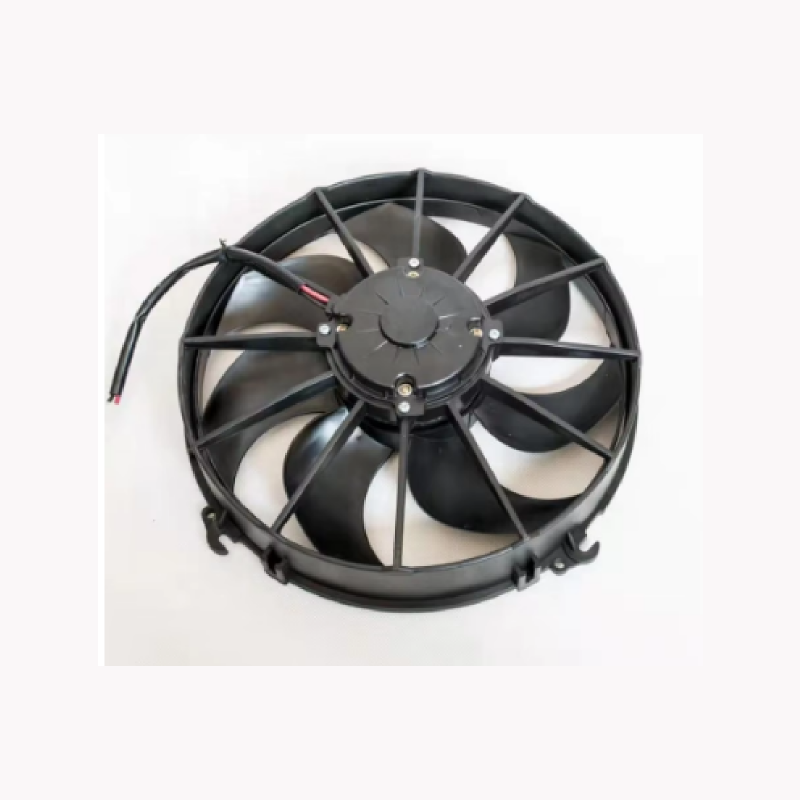
The condenser fan blade configuration directly influences airflow characteristics and heat transfer effectiveness. Curved blade designs, commonly used in vehicle applications, provide improved aerodynamic efficiency compared to straight blades. The curvature angle, blade pitch, and tip geometry affect airflow velocity distribution across the condenser surface, ensuring uniform heat exchange throughout the coil area.
Airflow patterns created by the condenser fan must account for the condenser coil geometry and fin spacing. Modern vehicle condensers feature closely spaced fins that enhance heat transfer surface area but can create airflow resistance. The condenser fan must generate sufficient static pressure to overcome this resistance while maintaining adequate airflow velocity for effective heat transfer. Fan blade design optimization balances these competing requirements.
The number of blades on a condenser fan affects both airflow characteristics and operational smoothness. Seven-blade configurations, as found in many bus air conditioning systems, provide smoother airflow with reduced pulsation compared to fans with fewer blades. This design approach minimizes airflow variations that could create hot spots or uneven cooling across the condenser surface, ensuring consistent refrigerant cooling performance.
Variable Speed Control and Cooling Optimization
Modern vehicle air conditioning systems often incorporate variable-speed condenser fan control to optimize cooling performance under different operating conditions. Fan speed modulation allows precise matching of heat rejection capacity with system cooling demands, improving energy efficiency and extending component life. Electronic control modules monitor refrigerant pressure, temperature, and ambient conditions to determine optimal fan speed settings.
During high ambient temperature conditions or heavy cooling loads, the condenser fan operates at higher speeds to increase heat transfer rates. The enhanced airflow provides greater cooling capacity, maintaining proper refrigerant condensation despite challenging thermal conditions. Conversely, during moderate load conditions, reduced fan speeds maintain adequate cooling while minimizing power consumption and noise levels.
The relationship between condenser fan speed and refrigerant cooling effectiveness follows a logarithmic curve rather than a linear progression. Initial increases in fan speed provide significant improvements in heat transfer, but diminishing returns occur at higher speeds. This characteristic necessitates careful calibration of fan control algorithms to achieve optimal balance between cooling performance and energy consumption in vehicle applications.
System Integration and Cooling Circuit Effects
Condenser Fan Interaction with Refrigeration Components
The condenser fan operates as an integral component within the complete refrigeration circuit, where its performance affects upstream and downstream components. Inadequate condenser fan operation increases condensing pressure, forcing the compressor to work harder and consume more energy. Elevated condensing pressures also reduce the pressure differential across the expansion valve, potentially decreasing cooling capacity at the evaporator.
Proper condenser fan operation maintains optimal condensing temperatures, which directly influence refrigerant flow rates throughout the system. Lower condensing temperatures, achieved through effective fan operation, increase the enthalpy difference across the expansion valve, providing greater cooling effect at the evaporator. This relationship demonstrates how condenser fan performance impacts overall system cooling capacity.
The thermal mass of the condenser coil creates lag time between fan speed changes and corresponding refrigerant temperature responses. This characteristic requires sophisticated control strategies that anticipate cooling demands rather than simply reacting to current conditions. Advanced fan control systems incorporate predictive algorithms that adjust fan speeds based on ambient temperature trends and cooling load projections.
Environmental Factors and Fan Performance Adaptation
Vehicle operating environments present unique challenges for condenser fan performance and refrigerant cooling effectiveness. Highway driving conditions provide natural airflow assistance, reducing fan workload while maintaining adequate heat transfer. However, stop-and-go traffic, parking situations, or stationary operations require full reliance on mechanical fan airflow for condenser cooling.
Altitude variations affect both air density and condenser fan performance characteristics. At higher elevations, reduced air density decreases the mass flow rate through the condenser for a given fan speed, potentially reducing heat transfer effectiveness. Compensating for altitude effects may require increased fan speeds or modified control parameters to maintain consistent refrigerant cooling performance.
Contamination from road debris, dust, or biological matter can accumulate on condenser surfaces and fan blades, degrading heat transfer performance over time. Regular maintenance of both the condenser coil and condenser fan ensures optimal airflow and heat exchange efficiency. Blocked or damaged fan blades can create airflow imbalances that reduce cooling effectiveness and increase power consumption.
Performance Optimization and Efficiency Considerations
Energy Balance and Fan Power Requirements
The energy consumed by the condenser fan represents a trade-off between electrical power input and thermal power rejection capability. Optimizing this balance requires understanding the relationship between fan power consumption and heat transfer enhancement. Generally, doubling fan speed increases power consumption by a factor of eight, while heat transfer improvement follows a much more modest curve.
Efficient condenser fan operation considers the total system energy consumption, not just fan power alone. Improved heat transfer from higher fan speeds can reduce compressor work requirements by lowering condensing pressures. The net energy balance often favors moderate increases in fan speed, particularly during peak cooling demands, when the compressor energy savings exceed additional fan power consumption.
Modern variable-frequency drives allow precise control of condenser fan power consumption while maintaining optimal cooling performance. These systems can adjust fan speed incrementally rather than operating in simple on-off modes, providing better matching of fan capacity with actual cooling requirements. The result is improved overall system efficiency and reduced electrical loads on the vehicle's charging system.
Diagnostic Indicators and Performance Monitoring
Monitoring condenser fan performance provides valuable insights into refrigerant cooling effectiveness and overall system health. Key performance indicators include fan motor current draw, airflow measurements, and condenser outlet refrigerant temperature. Deviations from normal operating parameters can indicate developing problems before they affect cooling performance.
Temperature measurements across the condenser provide direct feedback on heat transfer effectiveness and fan performance adequacy. The temperature difference between refrigerant inlet and outlet should remain within specified ranges for given operating conditions. Reduced temperature differential may indicate insufficient airflow from condenser fan problems or blocked heat transfer surfaces.
Vibration analysis of condenser fan assemblies can detect developing mechanical issues that could affect airflow performance. Unbalanced fans, worn bearings, or damaged blades create characteristic vibration signatures that trained technicians can identify. Early detection and correction of these issues prevent degraded cooling performance and potential system damage.
FAQ
What happens if the condenser fan fails in a vehicle air conditioning system?
When a condenser fan fails, heat transfer from the refrigerant to ambient air becomes severely limited, causing condensing pressures to rise dramatically. This leads to reduced cooling capacity, increased compressor workload, and potential system protection shutdowns. The vehicle may experience poor air conditioning performance or complete system failure, particularly during stationary operation or low-speed driving when natural airflow is insufficient.
How does condenser fan speed affect refrigerant subcooling?
Higher condenser fan speeds increase heat transfer rates, which enhances subcooling by removing more thermal energy from liquid refrigerant below its saturation temperature. Improved subcooling increases system efficiency by ensuring liquid refrigerant enters the expansion valve, preventing flash gas formation and maximizing cooling capacity at the evaporator. However, excessive fan speeds may provide diminishing returns while increasing power consumption.
Can a condenser fan be too powerful for effective refrigerant cooling?
While more airflow generally improves heat transfer, excessive condenser fan capacity can create inefficiencies through increased power consumption without proportional cooling benefits. Oversized fans may also cause pressure drops across the condenser that affect refrigerant flow patterns. The optimal fan capacity should match the condenser design and system cooling requirements while considering energy efficiency and noise constraints.
Why do some vehicle condensers use multiple fans instead of one larger fan?
Multiple smaller condenser fans provide better airflow distribution across large condenser surfaces, reduce single-point failure risks, and allow variable cooling capacity through selective fan operation. This configuration enables more precise control of heat transfer rates and improved system reliability. Multiple fans can also provide redundancy, maintaining some cooling capability if one fan fails, which is particularly important in commercial vehicle applications.